The Impact of Salt Air on Your Window Screens and When to Replace Them
The Impact of Salt Air on Your Window Screens and When to Replace Them
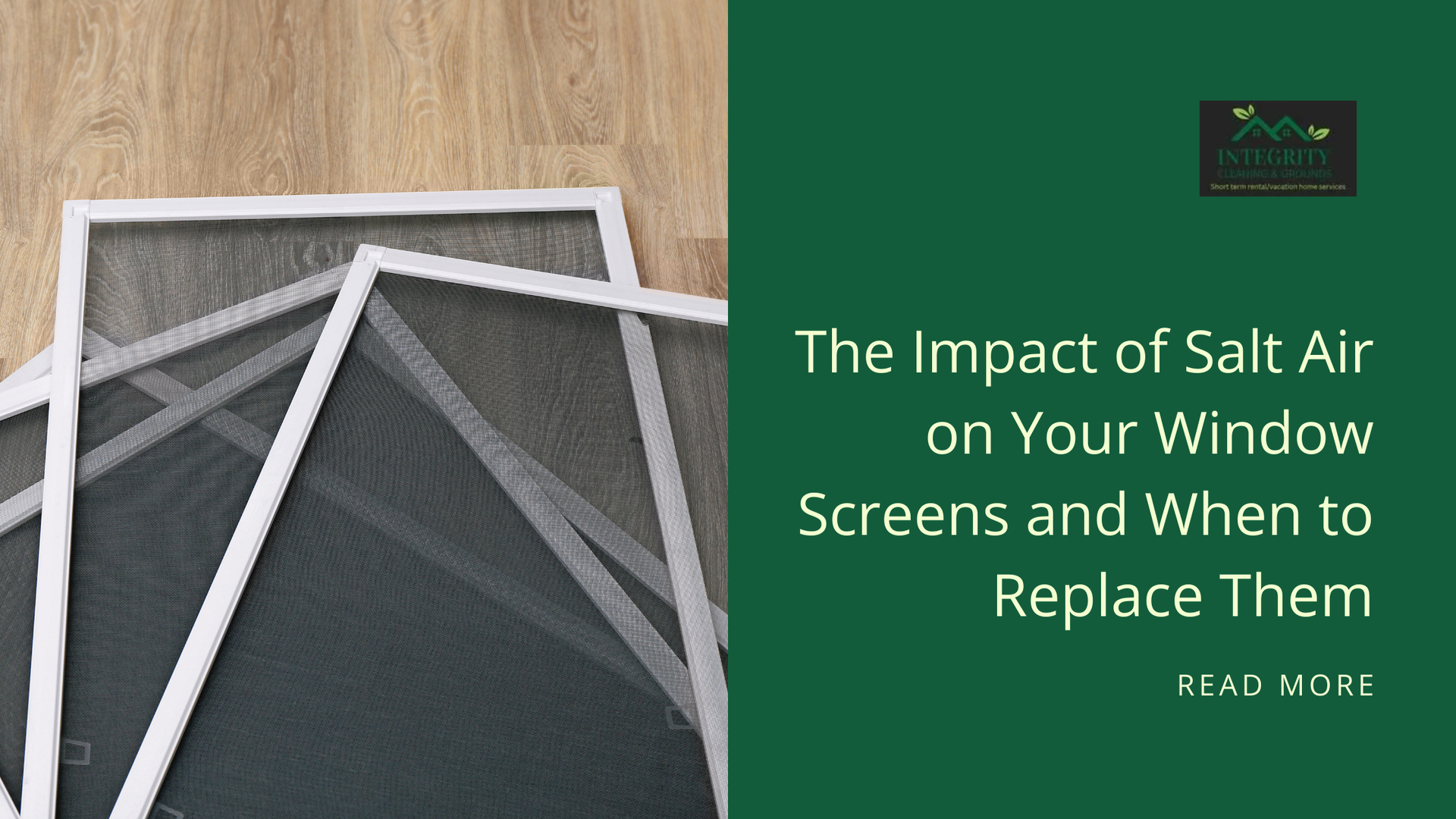
- Salt air slowly weakens screen materials, causing corrosion, clogged mesh, and reduced airflow that can affect overall home comfort.
- Understanding early damage signs helps homeowners protect ventilation and avoid long-term structural issues.
- Integrity Cleaning and Grounds LLC supports coastal homeowners with detailed cleaning, professional assessments, and reliable screen replacement solutions.
Coastal living offers unmatched beauty, but it also brings unique maintenance challenges for homeowners. One of the most overlooked areas is window screens. Salt air drifts through coastal neighborhoods every hour of the day, settling on screens, frames, and mesh materials. At first, the buildup feels harmless. Over time, that same salty moisture leads to corrosion, weakened mesh, brittle frames, and blockages that restrict airflow. Many homeowners do not realize that their window screens endure constant stress from salt exposure, even on calm days without ocean spray.
Understanding exactly how salt air affects window screens helps you stay ahead of repairs, maintain a healthy indoor environment, and preserve the value of your home. The following sections offer a thorough look at salt exposure, the structural impact it creates, the signs that indicate replacement, and practical steps that extend the life of your screens.
How Salt Air Interacts With Window Screen Materials
Salt air contains microscopic particles of sodium chloride suspended in moisture. These particles travel surprising distances from the shoreline and settle onto any surface they encounter. Once they land on your window screens, they begin a gradual chemical reaction that affects both metal and synthetic materials. Even if your home sits several miles from the water, the effects add up year after year.
Metal screens experience the most noticeable changes. Aluminum is a popular material because it is lightweight and budget-friendly, yet salt accelerates oxidation in aluminum. As oxidation spreads, the metal loses strength, becomes pitted, and eventually forms holes. Homeowners often first spot a faint white residue, which signals the initial stages of deterioration.
Stainless steel screens resist corrosion better but still face long-term wear when exposed to constant salt. In coastal climates, stainless steel eventually shows discoloration, light rust spots, and surface texture changes. It handles harsh elements longer than aluminum, but will not stay pristine without cleaning and careful monitoring.
Fiberglass screens face a different kind of challenge. While they do not rust, the mesh fibers trap salt crystals within their weave. Over time, these crystals degrade the outer coating of the fiberglass threads and lead to fraying. Fiberglass also becomes stiff after extended salt exposure, which reduces airflow and leads to cracking along the edges.
No matter which material you choose, salt air consistently affects structure, airflow, and clarity. The impact may start small, but ongoing exposure guarantees cumulative damage.
Why Salt Exposure Accelerates Corrosion and Wear
Salt acts as a catalyst. When moisture settles on a metal screen that already holds salt residue, the combination creates an ideal environment for corrosion. The sodium component attracts water, and water activates oxidation. Once oxidation begins, it spreads under the surface layer of the metal. The screen eventually weakens enough for holes or tears to appear with only light pressure.
Salt also grinds into the mesh surface. Even though the particles are small, they behave like abrasive crystals. When wind moves the screens or when someone touches them, those crystals rub against the mesh and wear it down. Homeowners sometimes notice rough texture or a sandpaper-like feel, which signals that the salt has accumulated on the surface for months.
In humid coastal climates, the process accelerates. Humidity prolongs moisture contact and supports chemical breakdown in both the mesh and the surrounding frame. As the frame weakens, the screen begins to sag or pull apart from its channel. This reduces structural integrity and allows insects or debris to enter the home. Over time, the constant interaction between salt composition, moisture, heat, and wind transforms a screen from a clean filtration layer into a compromised structure that can no longer perform its job.
How Salt Air Affects Indoor Comfort and Air Quality
The state of your window screens influences the environment inside your home more than many homeowners realize. Screens protect your interior from insects, debris, dust, and larger particles carried by outdoor air. When salt accumulates on the mesh, airflow becomes restricted. This impacts your home in several ways.
Restricted airflow reduces natural cooling. Many homeowners in coastal regions rely on sea breezes to regulate indoor temperature, especially in moderate climates. When screens become clogged or stiff, the air movement they expect simply does not happen. This forces the home to feel warmer and increases dependence on air conditioning.
Another issue is air purity. Salt residue collects other particles, trapping pollen, dust, mold spores, and sand. When moisture settles on these particles, the screen becomes a breeding ground for unpleasant odors or microbial growth. Any breeze that pushes through the compromised screen can carry these particles inside. Over time, this decreases indoor air quality and contributes to allergy symptoms.
Poorly maintained screens also pose challenges for those who prefer fresh air ventilation. Windows that usually provide refreshing airflow begin to feel stagnant. Residents may feel that the room stays stuffy even with the windows open. This small shift in comfort often signals deeper maintenance needs.

When Salt Damage Signals It Is Time to Replace Your Screens
Every homeowner wants to know how to determine the right moment for screen replacement. Since salt air affects screens gradually, many households continue using damaged screens without realizing how ineffective they have become. The following conditions clearly signal that replacement provides stronger long-term value than repair.
If oxidation has spread across a large portion of an aluminum or stainless steel screen, replacement becomes the most practical choice. Once metal begins to pit or weaken, the structure will continue to deteriorate even with cleaning. Repairing isolated areas will not restore the original strength.
When fiberglass mesh frays or cracks extensively, replacement ensures proper function. Fiberglass does not regain flexibility once the threads break down. If you notice that the mesh snaps when touched or bends unevenly when pressure is applied, the screen has reached the end of its functional life.
Reduced airflow that persists after cleaning also signals replacement. If salt crystals and debris have compacted the mesh to the point where water cannot rinse it clean, the material has lost its filtration efficiency.
Large tears, multiple pinholes, or stretched corners indicate structural failure. Even small openings represent more than cosmetic damage. They compromise insect protection, airflow, and screen stability.
Replacing screens at the right time helps preserve indoor air quality and prevents damage to window frames. If a screen begins to warp or sag, that movement may place stress on the tracks or hardware surrounding the window. Timely replacement protects both the screen and the window system.
How Regular Maintenance Extends the Life of Window Screens in Coastal Areas
While salt air presents consistent challenges, routine cleaning and maintenance can significantly extend the life of your screens. Many homeowners underestimate the difference a simple maintenance routine can make.
The most important step is rinsing screens with fresh water. Salt crystals dissolve easily with water, and a gentle rinse every few weeks removes residue before it builds into thick layers. Avoid high-pressure sprayers, which can stretch or tear mesh. A garden hose set at a low setting works well.
For deeper cleaning, use mild soap and a soft brush. Gently scrub the mesh to loosen embedded salt while keeping the pressure soft enough to protect the fibers or metal. Thorough rinsing afterward ensures no soap remains, since leftover soap can attract dust.
Allow the screens to dry completely. Moisture sitting on salt residue forms a corrosive mixture that accelerates deterioration, so drying plays an important role in long-term protection.
Inspect the corners and frames often. Look for gaps where the screen may be separating from the frame. Early identification of frame damage helps prevent full replacement later.
If your home sits extremely close to the shoreline, an annual professional cleaning can make a noticeable difference. Professionals use specialized cleaning agents and techniques tailored to salt removal without harming the mesh.
Material Choices That Perform Better Against Salt Exposure
Some screen materials stand up to coastal conditions more successfully than others. While no material avoids long-term salt effects completely, choosing a premium option improves longevity.
Stainless steel rated for marine environments performs well under salty conditions. The higher grade of stainless steel resists corrosion better than standard versions. Homeowners looking for strength and durability often choose this option.
Fiberglass coated with protective resins also works well for coastal properties. The resin improves resistance to moisture and prevents salt from penetrating the fibers as quickly. This extends both clarity and structural life.
Aluminum remains a budget-friendly and widely used option, but it requires more frequent cleaning and replacement in regions with strong ocean influence.
Some manufacturers offer specialty coatings that provide an added barrier against corrosion. These coatings resist salt adhesion, making cleaning easier while slowing the oxidation process.
Selecting the most suitable material depends on your proximity to the coast, your home’s exposure to wind, and your long-term maintenance preferences. A thoughtful choice can add years to the life of your window screens.
How Professional Services Help Maintain Screen Health in Coastal Homes
While regular homeowner maintenance offers a strong foundation, professional care provides deeper protection. Professionals evaluate the condition of each screen, identify early corrosion, and perform thorough cleaning that removes compacted salt from hard-to-reach areas.
Professionals also examine the structure of the frame, clips, hardware, and surrounding trim. Salt exposure often affects these areas faster than homeowners realize. Early intervention helps prevent window frame damage that becomes costly later.
Another benefit is access to specialty treatments. Professionals use cleaning solutions formulated to dissolve salt without weakening the mesh. They also apply protective coatings that slow future buildup.
If replacement becomes necessary, professionals help select the correct material for your climate. They ensure proper installation that maintains screen tension, airflow, and frame protection.
Relying on professional expertise provides reassurance that your window screens stay strong and functional even in harsh coastal conditions.
Protect your coastal home with trusted care for your window screens. At
Integrity Cleaning and Grounds LLC, we provide detailed cleaning, screen assessment, and replacement support that keep your home comfortable and fresh. Reach out for dependable service tailored to coastal conditions.